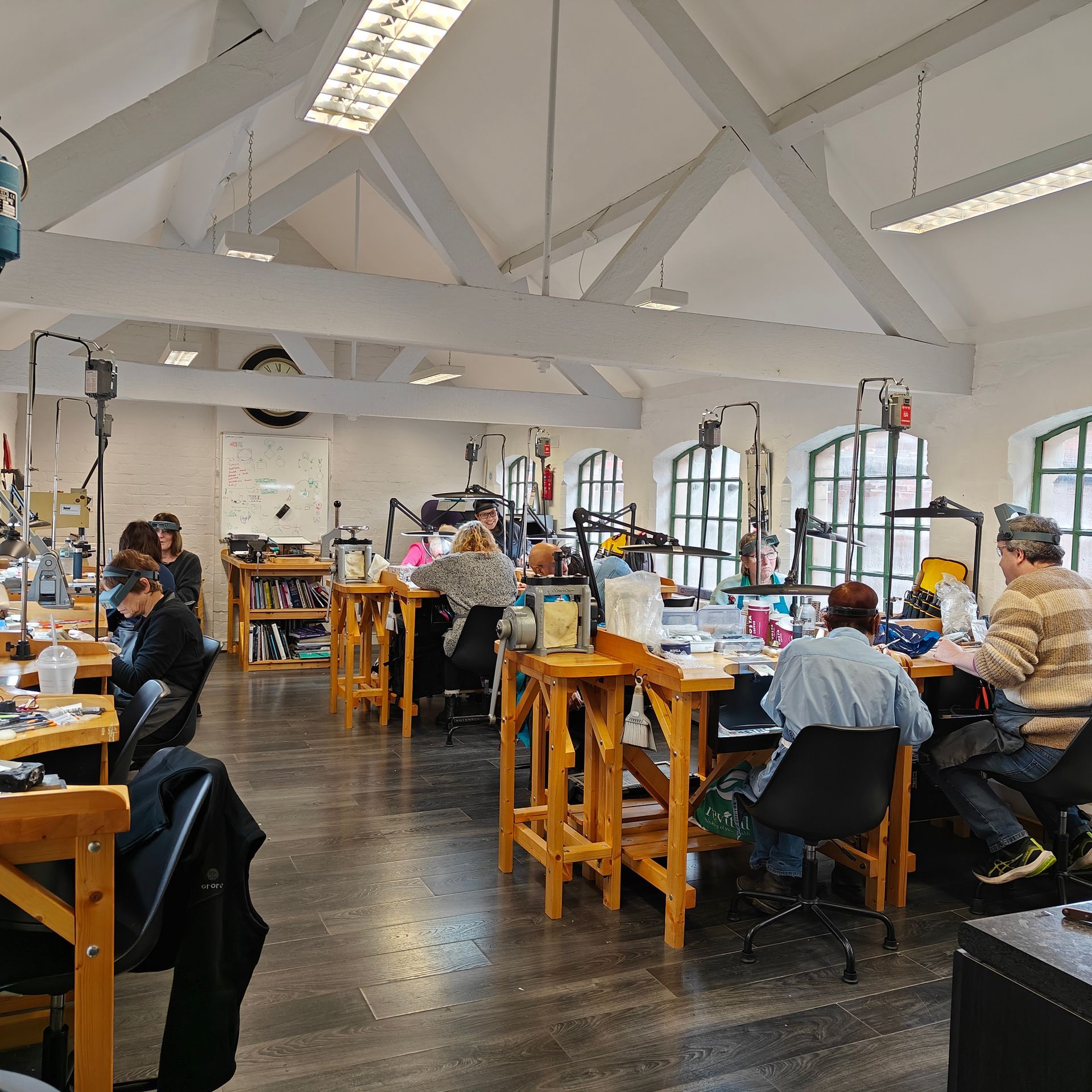
Jewellery Making & Goldsmithing Courses in Birmingham: A Beginner's Guide
Thinking about learning jewellery making or goldsmithing?
Here's what to look for when choosing a course, and how different types of jewellery courses compare.
What kind of jewellery course are you looking for?
Choosing the right jewellery course depends on what you want to be able to do.
Do you want a simple, fun experience? Perhaps you're considering a degree, or you want to start making your own designs. Maybe you've already tried jewellery making and know you want to take it further.
You may want to start a small business selling at craft fairs and galleries, learn enough to carry out your own repairs and make pieces in an existing jewellery shop, become a working goldsmith, find a new hobby, or your employee needs training.
These are all very different goals, and they require different levels and types of training.
- Jewellery Making Experiences if you want a fun, creative day out, maybe with family, friends or a teambuilding experience, you don't need to be creative or 'arty', jewellery making can be rewarding to all ages, abilities and backgrounds.
- One Day Workshops try something new, maybe take home a silver piece of jewellery as a keepsake, you could sign up as many or as few as you like, your tutor may also encourage you to personalise your pieces for yourself or to give as gifts.
- Beginner Jewellery Making if you want a project-led course that teaches fundamental techniques, a beginner course can be a great starting point. It can give you the knowledge and confidence to continue making your own jewellery independently, while helping you discover whether jewellery making is something you want to become more involved in before investing in tools or committing to a longer-term training.
- University and Degree Courses can provide a broader academic education in jewellery, design, art and related subjects, and may be suited to students interested in the creative industries, design practice or further academic study. They usually involve a significant time and financial commitment. It is important to understand, however, that studying jewellery at degree level and learning the traditional skills of a working goldsmith are not necessarily the same thing. A qualification tells an employer what you have studied; working at the bench demonstrates what you can actually do. If your aim is to develop goldsmithing skills, look carefully at how much hands-on bench time a course provides, which traditional techniques are taught, and how much opportunity you have to practise and develop those skills.
- Rent a Bench not a course but renting a bench space within a shared workspace after completing a course, sharing a space with other skilled persons, no training included, but often a good place to start practicing and sharing knowledge with others, be it practical knowledge or trade connections and networking, It can be a slower and more self-directed route, and is generally better suited to people who are comfortable learning independently.
- Ongoing Jewellery Classes regular classes, with a tutor available to offer guidance to help you develop your skills. These may involve working on your own ideas and designs, or following set projects. This can be a good way to work towards personal goals and, for some students, to develop skills that can eventually lead towards working in the jewellery trade.
- Masterclasses short and intensive courses that look at a particular jewellery technique, such as setting, casting, engraving, polishing, gemology, often some previous experience is needed.
- Private 1:1 courses, to work on exact areas needed to the individual, bespoke, short & intensive, can be costly but useful if need urgent training.
Where does the School of Master Jewellers fit?
The School of Master Jewellers (SoMJ) was founded by Cassandra, a Master Goldsmith with nearly 40 years experience working in the jewellery trade. Alongside her professional work, Cassandra has more than 20 years' experience teaching at university level and has spent the last 10 years developing and teaching at SoMJ.
This combination of practical industry experience and teaching experience is at the heart of the school.
Cassandra understands the skills, commitment, and practice required to become a skilled goldsmith, but also understands that people come to jewellery making for very different reasons.
SoMJ was created to be a safe, friendly and enjoyable place to learn, whether you want to explore jewellery making as a creative hobby, develop your own designs, or work towards making fine jewellery to a high standard.
Our courses at SoMJ have evolved from nearly 40 years of practical experience, and a passion for passing on traditional jewellery making skills.
These are skills that have been passed from Master Goldsmiths to their apprentices for generations.
Cassandra began her own training at just 16, and Birmingham's Jewellery Quarter has been part of her working life ever since.
That tradition of learning at the bench, from someone who knows the trade, is still central to the way we teach at SoMJ.
Looking for a beginner Course?
If you are ready to start learning, take a look at our Level 1 Beginner Jewellery Making courses.